Arctic Pack Ice
Probably one of the highest profile aspects of climate change has been the effect on Arctic pack ice and the associate effect on polar bears. The Arctic Ocean has an area of 14 million km2 and represents about 3% of the Earth’s surface. During the cold winter months the arctic pack ice grows in thickness and extent until it completely fills the entire Arctic Ocean from Canada to Russia, from Greenland to Alaska, and also Hudson Bay.
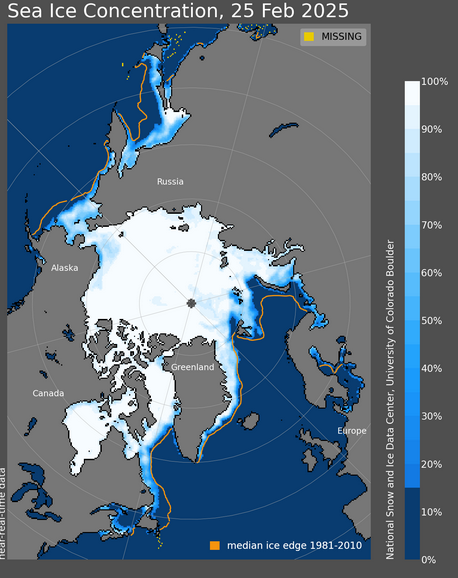
The Arctic sea ice area or extent is highly seasonal, growing to a maximum area of about 13 million km2 in early March, but by September only about one-third (33%) of this winter ice remains. The minimum pack area was typically 4 to 5 million km2 in 1980s. However by 2005 the spring melt rate had increased so now about 25% of the winter ice remains and the minimum pack ice area is between 3 and 4 million km2, or about 1 million km2 less.
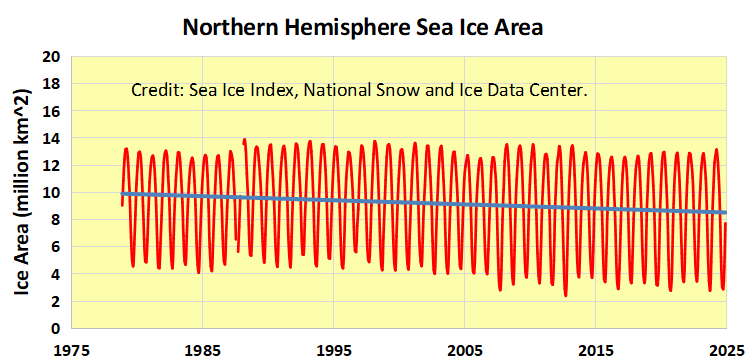
There have been numerous press stories about the Arctic Ocean being ice free, initially by 2015, and now by 2027. While there has been some reduction in the summer pack area between 1990 and 2005 the minimum summer ice area has been more-or-less stable at 3 million km2 for the last 20 years.